
🏚️ The Reality on the Ground: Kampungs, Kos-Kosan, and the Suburban Sprawl
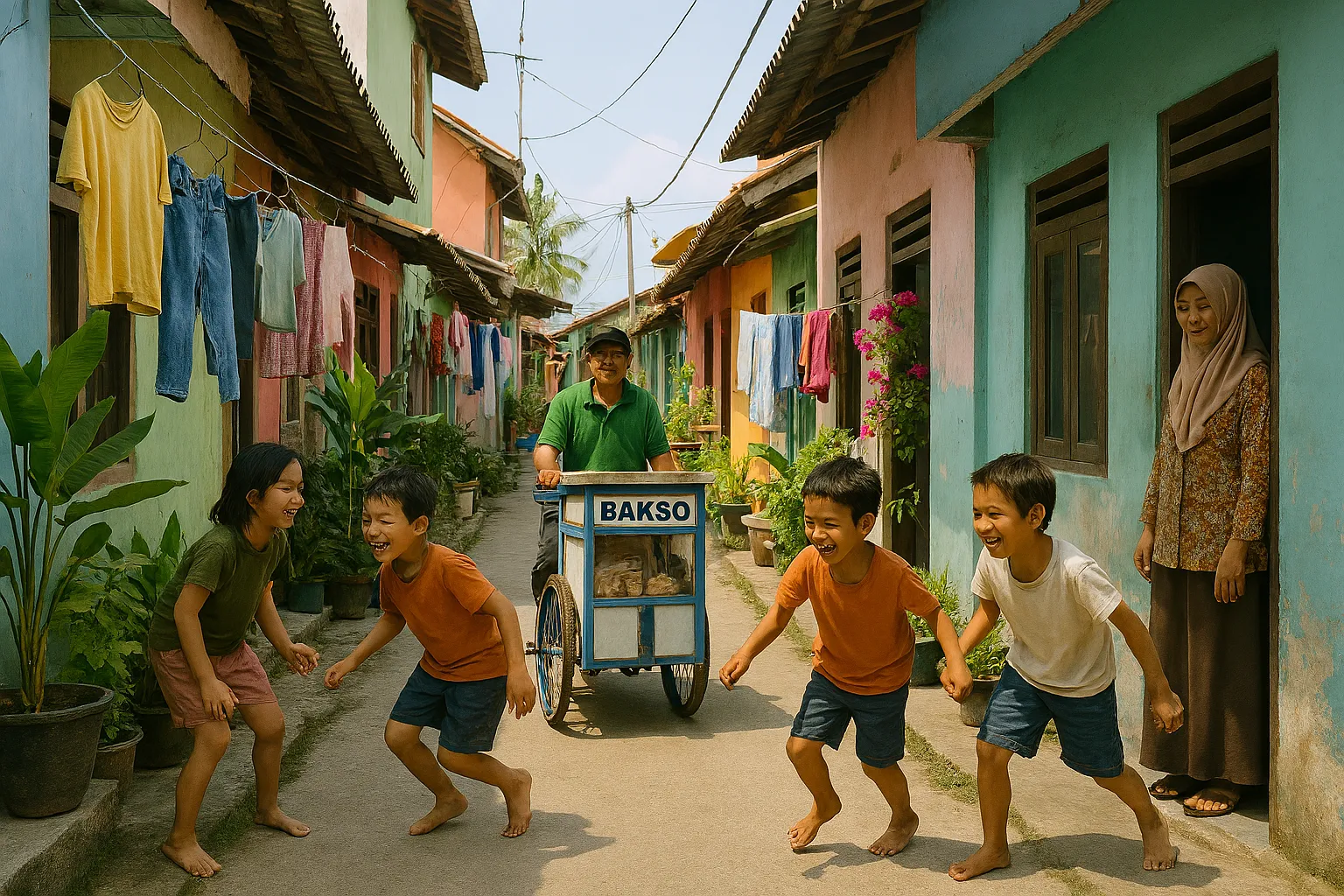
If you’ve ever taken a late afternoon stroll through the back alleys of Jakarta or Bandung, you’ve probably brushed past a chaotic charm that feels uniquely Indonesian — rows of tightly packed kampung houses, the occasional warung blasting dangdut music, and tangled power lines hanging like jungle vines. But beneath this urban character lies something far less charming: a housing crisis that’s been simmering for decades.
You might also like: Bali's Golden Gateway: Your Easy Journey to Vibrant Kuta Beach
Most young Indonesians today grow up in shared rented rooms (kos-kosan) well into their 30s, while dreaming of the holy grail of adulthood: owning a rumah subsidi or a modest cluster home in a far-flung suburb. Problem is, even that modest dream is becoming increasingly out of reach.
📉 By the Numbers: Facts and Figures on Indonesia’s Housing Deficit
Let’s talk numbers—because the housing crisis in Indonesia isn’t just a vibe, it’s a verified problem:
- 12.7 million housing unit backlog (BPS, 2022)
- 700,000–800,000 new households are formed each year
- Only 400,000–500,000 new houses are built annually
- 56.8% of urban households are unable to afford formal housing (World Bank)
Now factor in urban migration, where people leave villages for dreams in the big city—and boom, you’ve got pressure on an already crumbling system.
👨👩👧 How This Affects Real Families: A Story From the Margins
Take Yanto, a 34-year-old ojol (online motorcycle driver) in Tangerang. Every day, he zips through housing estates delivering meals to families who live in the very types of houses he’s tried—and failed—to own. He and his wife applied for a subsidized mortgage (KPR Subsidi) three times. Rejected each time. Income too low, documentation “incomplete,” and once—believe it or not—because their electricity bill was too cheap to prove residency.
Now, they rent a tiny kos for Rp900,000/month. It leaks when it rains. They hang clothes next to the rice cooker. And their 5-year-old daughter has asthma, likely worsened by the moldy walls.
This isn’t an isolated case. It’s life for millions
Historical Lapses and Missed Opportunities
Yang Perlu Kamu Ketahui :
🏛️ The Ghost of Urban Planning Past: Lessons from Jakarta and Surabaya
Indonesia’s housing crisis didn’t appear overnight. It’s the lovechild of decades of mismatched priorities and reactive planning. Back in the 1970s and ’80s, cities like Jakarta and Surabaya exploded with growth—but not much guidance.
Jakarta, for instance, grew faster than it could plan. Policies prioritized highways over homes, malls over public housing. Meanwhile, kampungs organically filled in the blanks, often without permits, sewage, or road access. What should’ve been guided development turned into patchwork survival.
Surabaya fared slightly better under more progressive mayors, but even then, zoning laws lagged behind the city’s actual growth. Result? Urban sprawl that forced lower-income residents further out, where infrastructure is still playing catch-up.
If cities were living beings, Jakarta would be that older sibling who tried to wing adulthood without a plan—and is still trying to sort it out.
💸 Post-Reformasi Boom and Bust: Why the Middle Class Still Can’t Afford a Home
Post-1998 Reformasi brought democratic reform—and a whole lot of speculative real estate investment. Developers went wild. Skyscrapers, apartments, gated housing clusters—many priced for foreigners or the upper crust of Indonesia’s elite.
And while GDP grew and the middle class expanded, housing affordability didn’t keep pace. Wages stagnated. Housing prices ballooned. The dream of owning a home drifted further from reach for ordinary Indonesians, especially in the cities.
A middle-income worker in Jakarta might earn Rp6–8 million per month, but even a basic subsidized home now costs around Rp180–250 million. Add transportation, childcare, groceries, and you’re left with… well, nothing.
In short: The market grew, but it didn’t grow with the people.
🛖 The Informal Housing Sector: From Squatter Settlements to Survival Architecture
Walk through any urban edge—Bekasi, Medan, Makassar—and you’ll see structures that aren’t on any architect’s portfolio: tin-roofed huts balanced on riverbanks, staircases made of crates, windows fashioned from banner ads.
This is Indonesia’s invisible housing sector. Not counted in official data. Not protected by law. And yet, vital to the economy.
These informal dwellings serve as housing for construction workers, street vendors, small factory employees—the very engine of urban life. But they remain in constant threat of eviction, flooding, and social exclusion.
Call it “survival architecture.” Because when the system fails to build homes for you, you build your own. Even if it’s on stilts above a ditch.
💰 FLPP: The Loan That’s Supposed to Save You (But Might Make You Cry)
Let’s talk about the big gun: FLPP, or Fasilitas Likuiditas Pembiayaan Perumahan. It’s a mouthful, but in theory, it’s a government-backed low-interest loan program to help low-income folks own homes. Sounds great, right?
In practice? It’s… complicated.
Here’s how it works:
- Interest rate: Fixed at 5% for up to 20 years
- Targeted at people earning under Rp8 million/month
- Partnered with developers to offer “affordable” homes
On paper, it looks generous. In reality, many people can’t even qualify—especially informal workers without payslips or bank history. And even if you do, the location of these FLPP houses is often miles from jobs, schools, or public transport.
As one frustrated buyer put it:
“I finally got approved, but the house was in the middle of nowhere. I spend more on fuel than the mortgage.”
— Reni, 29, Bekasi
And don’t get us started on the developer quality. Think paper-thin walls, zero ventilation, and cracked tiles by month three.
🏦 TAPERA: A Bold Idea or Bureaucratic Overreach?
Then there’s TAPERA — Indonesia’s version of a mandatory savings scheme for housing. Essentially, 3% of your salary is auto-deducted, half from you, half from your employer. The government promises that one day, this fund will help you buy, build, or renovate a home.
That’s the theory.
In reality, TAPERA has triggered massive public backlash. People are already dealing with BPJS, taxes, and unstable incomes. Now another deduction?
Worse, the mechanism is opaque. How are the funds managed? Will the returns match inflation? What if you never qualify for a house?
Many young workers joke:
“TAPERA is like a piggy bank I’m never allowed to open.”
Until there’s more transparency, TAPERA feels less like a lifeline and more like another bureaucratic mystery box.
🏘️ The One Million Houses Program: Ambition vs. Impact
Launched with flair in 2015, the One Million Houses Program (Program Sejuta Rumah) aimed to build — surprise — a million homes per year.
And it nearly did. By 2022, the government proudly claimed over 6.9 million homes had been built under the initiative.
👏 Sounds impressive. But let’s look deeper.
Many of these houses were:
- Built in flood-prone areas
- Far from city centers
- Built without full infrastructure (roads, water, internet)
- Sold to people who couldn’t afford to live there without additional debt
It’s a classic case of quantity over quality. Politically popular, but socially questionable.
If housing were a restaurant, this program served up one million dishes… but forgot the seasoning, plates, and sometimes, the food itself.
🧩 Coordinating Ministries, Clashing Interests
Indonesia’s housing policy is a sprawling spiderweb of overlapping ministries and agencies:
- Ministry of Public Works and Public Housing (PUPR): the main architect of subsidized housing schemes
- Ministry of Agrarian Affairs and Spatial Planning: handles land regulation
- Local governments: in charge of permits and zoning
- Bank Indonesia + Financial Services Authority (OJK): oversee the finance side
All of them have some say. None of them have full control.
The result? Policies that sound promising on paper but unravel in execution.
You might have a subsidized housing project approved by the central government — only to have it delayed for 2 years because the local district office hasn’t issued a land certificate.
Or you get stuck in this all-too-familiar bureaucratic loop:
“For the land permit, go to the housing office. Oh wait, it needs a stamp from the finance unit. Oh but that stamp’s only valid with a local environmental assessment. And that? That’s in a different office altogether — good luck.”
It’s the real-life version of Monopoly, except no one’s winning.
🏗️ The Developer-Government Tango: Incentives, Subsidies, and Hidden Agendas
Let’s not ignore the elephant in the room: developers. They’re supposed to be the builders of dreams, right? But many are also savvy players of the subsidy game.
Some chase FLPP and Sejuta Rumah projects not because they want to help the poor, but because the government guarantees sales. Imagine selling 1,000 units in bulk to the state, zero marketing needed.
It becomes a numbers game. Cheap land, cheaper materials, fast turnover. And if they cut corners? No one’s really watching. After all, government audits are rare, and housing complaints often go nowhere.
Behind the facade of social housing lies a subtle tug-of-war between:
- People who need homes
- Developers who need profits
- Politicians who need votes
Housing policy here isn’t just urban planning—it’s a quiet battlefield of competing agendas.
🏡 “Layak Huni”: Who Decides What Counts as a Livable Home?
One of the strangest things in Indonesia’s housing policy is the term “layak huni” — “fit for living.”
According to the official guidelines, a livable house must have:
- Minimum 36 sqm of floor area
- Solid walls, ventilation, access to clean water
- Sanitation and electricity
Simple, right?
But here’s the twist: There’s no standard enforcement. In some regions, cardboard walls and squat toilets still pass. In others, the same houses fail inspection for “lack of green space.”
It’s like trying to bake a cake when the recipe changes every time you open the book.
To a developer, “layak huni” might mean “just enough to pass.”
To a family of four, it might mean “somewhere safe where my kids can sleep without rats.”
And that’s the problem. No one’s asking the people who actually live there.
🏦 The KPR Gauntlet: Stories of Rejections, Delays, and Absurd Requirements
You’d think getting a subsidized mortgage (KPR Subsidi) would be easier than buying a private house, right? It’s meant for low-income people, after all. But try asking the thousands who’ve gone through the process — and you’ll hear the same story: stress, dead ends, and absurd paperwork.
To qualify, applicants must:
- Be a first-time home buyer
- Earn under Rp8 million/month
- Have a fixed income (no freelancers or gig workers)
- Not have any other property or KPR on record
Sounds fair, until you realize:
- Many Indonesians don’t have official work contracts
- Some earn cash daily (ojol drivers, informal vendors) and can’t show salary slips
- Some are rejected for having too many dependents, or because their wife doesn’t work
- Others get rejected for… wait for it… spending too little on electricity
No, really. Banks sometimes use your electricity bill to estimate whether you’re “serious” about applying. If it’s too low? Suspicious. Maybe you’re just squatting. Rejected.
It’s a cruel irony: The more frugal you are, the more suspicious the system becomes.
💸 Hidden Costs, Bribes, and Murky Agents
Let’s say you do manage to qualify. Awesome, right? Not so fast.
That’s when the “biaya-biaya nggak jelas” start appearing:
- Admin fees
- Agent fees (even if you didn’t hire one)
- “Accelerated processing” costs
- Notary fees that mysteriously vary between applicants
Sometimes, these costs are bundled quietly by the developer or agent. Other times, they’re whispered under the table.
And then there’s the notorious “uang rokok” — unofficial tips expected by certain parties to “smooth things over.” Not mandatory, of course. Just… expected. Wink wink.
People desperate for housing often just pay. Because what’s the alternative? Another year of waiting in a moldy kos?
🏘️ Disconnected from Reality: The Rural-Urban Mismatch in Housing Availability
Here’s another weird twist: Even when there are houses available through government programs, they’re often in places no one wants—or can afford—to live.
Many subsidized homes are:
- Far from city centers (sometimes 2–3 hours by motorbike)
- Lacking public transport
- Surrounded by empty lots (no markets, schools, clinics)
- Built before the infrastructure catches up
Imagine getting your FLPP approved only to find your new house is in the middle of a former rice field with no access road. You live there, sure—but now you spend 4 hours commuting and double your fuel budget.
One woman we spoke to called her subsidized home:
“murah tapi menyiksa” — cheap but torturous.
In trying to solve the housing crisis, we’ve often just moved it to the middle of nowhere.
🏗️ Modular Housing, Co-living, and 3D-Printed Homes
Forget concrete jungles. Imagine a home that’s:
- Built in three days using prefabricated panels
- Designed to breathe in Indonesia’s tropical heat
- Easily movable and expandable
- Or even 3D-printed on-site with local materials
This isn’t science fiction. Startups in places like Yogyakarta and Bandung are piloting modular housing models—where homes are assembled like Legos, drastically reducing cost and time.
Meanwhile, co-living spaces (think dorms for adults, but cooler) are popping up in urban hubs like Jakarta and Bali. These offer:
- Shared kitchens and workspaces
- Flexible rent
- Community activities
Co-living isn’t just a fad — it’s a potential solution for the young, single workforce priced out of traditional housing. And 3D-printed homes? Well, one project in Denpasar built a prototype for under Rp70 million. Yep, you read that right.
🧱 Young Architects Rewriting the Rulebook
Enter the new guard: a wave of socially conscious architects who believe “good design shouldn’t just be for the rich.”
People like:
- Eko Prawoto, who works with bamboo and vernacular Javanese architecture
- Andra Matin, who’s reimagining space for dense cities
- Arsitek Komunitas, a collective that helps kampung residents co-design upgrades
These architects aren’t building luxury towers. They’re working in disaster zones, rural areas, and dense kampungs—finding beauty in constraint.
Their work blends traditional knowledge with modern materials. Think cross-ventilation, local cooling systems, and flexible layouts—without AC or high costs.
In their hands, “cheap” doesn’t mean ugly. It means smart.
🤝 Public-Private Partnerships With Real Potential
Believe it or not, some of the most promising housing projects have come from unlikely pairings: government meets private sector, civil society meets business.
Take Kampung Susun Akuarium, for example. Once evicted under a harsh Jakarta administration, this informal settlement was rebuilt through a partnership between residents, city hall, and NGOs—with residents actively designing their own flats.
Or look at CSR-driven housing from companies like BUMN (state-owned enterprises), who now develop homes near industrial zones for their workers—cutting commute time and improving productivity.
The magic happens when:
- The public sector provides land + policy
- The private sector brings capital + innovation
- And communities contribute insight + legitimacy
When all three align, real change becomes more than possible. It becomes sustainable.
🏙️ Best Practices from Progressive Cities Like Semarang and Bandung
It’s not all gridlock and ghost permits. Some cities are breaking the mold and proving that with political will, creativity, and empathy, housing policy can actually work.
Semarang, for instance, launched:
- A program to retrofit flood-prone kampungs with raised pathways and drainage
- Incentives for developers who build mixed-income housing
- A real-time housing data dashboard that tracks progress transparently
Meanwhile, Bandung, under mayors like Ridwan Kamil, became a laboratory for urban innovation. The city experimented with:
- Micro-apartments for informal workers
- Kampung revitalization that preserved community structure
- Open digital applications for housing assistance (bye-bye shady middlemen)
These local initiatives might not make headlines nationwide, but for the people living there, it’s night and day.
📋 The Licensing Nightmare: Why Land Permits Still Take Months (or Years)
But not every city is a Semarang or Bandung.
In many districts, getting a simple land certificate can take:
- 6–12 months if you’re lucky
- Or years if the land has unclear boundaries or disputed ownership
The culprits?
- Outdated manual processes
- Overlapping land maps
- “Facilitation fees” (you know what that means)
And let’s not forget the infamous “surat keterangan tidak mampu” — the poverty letter required for subsidy eligibility. Sometimes, local offices:
- Misplace it
- Delay it
- Or simply “suggest” a donation to move it along
This bureaucracy doesn’t just frustrate people. It kills momentum. Developers stall. Buyers give up. Housing dreams rot in drawers full of paperwork.
🏘️ Community-Led Housing Initiatives: When Citizens Take Control
But here’s the twist: in places where governments stall, communities often step up.
Across Indonesia, you’ll find:
- Self-built housing cooperatives (koperasi perumahan swadaya)
- Gotong royong build days where neighbors pitch in to construct homes
- Micro-financing collectives that pool money monthly for land purchases
One standout is the Yayasan Rumah Komunitas, which has helped over 1,500 families in rural Central Java build secure, eco-friendly homes using local materials, sweat equity, and shared ownership models.
It’s housing by the people, for the people.
They’re not waiting for policy. They’re building futures with bamboo, bricks, and belief.
🌊 Building in Flood Zones: A Ticking Time Bomb
Let’s be blunt: Indonesia has a flood problem. Jakarta alone is sinking at an alarming rate — up to 10 centimeters per year in some areas. And yet, we keep building there.
Why?
Because the land is cheap. Because developers are desperate. Because city planners look the other way. And because, for many low-income families, it’s either a house in a flood zone or no house at all.
But the cost of flooding goes far beyond ruined furniture:
- School kids miss weeks of education
- Small businesses lose stock
- Families go into debt repairing damage they can’t afford
In many subsidized housing clusters, flooding isn’t an if, it’s a when. One viral TikTok even showed a woman cooking while waist-deep in murky floodwater — “as usual,” her caption read.
Disaster is being normalized.
🌳 Deforestation for Development: Are We Trading Forests for Rooftops?
To meet the demand for new housing, developers often seek cheap, unused land — which in many cases, means converting:
- Agricultural fields
- Mangroves
- Even protected forest edges
Between 2015 and 2020, over 125,000 hectares of forest were lost each year in Indonesia. Not all for housing, of course. But housing plays a part — especially on the urban fringe.
In Kalimantan and Sulawesi, new housing clusters have eaten into orangutan habitats and fragile ecosystems. Once gone, they don’t come back.
The moral dilemma: Can we really call it “progress” if it costs us the environment that sustains us?
🌿 The Case for Green Housing in Indonesia’s Hot, Humid Future
Here’s the good news: Green housing isn’t just possible in Indonesia — it’s ideal.
Traditional Javanese, Minangkabau, and Dayak houses were designed with:
- Natural cross-ventilation
- Elevated platforms (to avoid floods and snakes)
- Local materials like bamboo, rumbia, or kayu ulin
- Shaded verandas for passive cooling
Modern green architecture builds on these principles with:
- Solar panels
- Rainwater harvesting
- Composting toilets
- Reflective roofing
And contrary to belief, these don’t have to be expensive. Some NGOs in Central Java have helped build eco-friendly homes for under Rp60 million — far cheaper than many FLPP units.
If the government redirected just a fraction of its housing budget toward green design training and subsidies, we could tackle the housing and climate crisis in one swing.
But for now? Green homes remain the exception, not the norm.
What the World Can Learn from Indonesia
🏡 Tropical Urbanism and Localized Design
While the global North obsesses over insulation and double-glazed windows, Indonesians have been living in homes built for the tropics for centuries.
Take the rumah joglo in Central Java or the tongkonan in Toraja — these aren’t just cultural artifacts. They’re masterclasses in sustainable, climate-smart design:
- High ceilings for hot air to rise
- Cross-ventilation to avoid A/C dependence
- Deep eaves to shield from tropical rain
Modern developers often ignore these blueprints, preferring copy-paste Western designs that don’t breathe, overheat, and trap moisture.
But some young architects and NGOs are leading a revival — blending tradition with modern materials. It’s tropical urbanism at its finest: homes that suit the people, the climate, and the culture.
The lesson? Design local. Build with the weather, not against it.
🕌 Leveraging Religious Institutions for Social Housing
Here’s something unique: In Indonesia, mosques aren’t just for prayer. They’re also:
- Emergency shelters
- Community kitchens
- Meeting halls
- And, increasingly, social infrastructure anchors
In some neighborhoods, masjid cooperatives (koperasi masjid) are teaming up to provide:
- Housing assistance
- Zero-interest loans
- Even land pooling for joint development
One groundbreaking initiative in West Java involved a network of mosques collectively funding and building a housing block for their lowest-income members. No red tape. No bureaucrats. Just people helping people, with faith as the bond.
It’s community resilience at a spiritual level. And a reminder that housing policy doesn’t always have to come from government.
🏚️ The Power of Resilience in Informal Communities
Indonesia’s kampungs get a bad rap — called messy, illegal, dangerous. But go inside, and you’ll find:
- Intricate support networks
- Shared child care
- Barter economies
- Communal cleanup days
They’re informal, yes. But they’re also resilient ecosystems that survive where formal housing fails.
During COVID-19 lockdowns, many kampungs organized:
- Neighborhood kitchens for those out of work
- Rotating patrols for safety
- Food-sharing stations
Compare that to many sterile apartment complexes in the West, where neighbors barely know each other.
There’s a lesson here: A house is just walls. But home is community. Kampungs understand that deeply. Maybe the rest of us need to catch up.
🏠 The Obsession with Ownership: Why Renting Is Still Taboo
In much of the world, renting is normal. Even aspirational. In cities like Berlin, Tokyo, and Amsterdam, long-term rental is part of life — not a sign of failure.
But in Indonesia?
“Masa udah 35 tahun masih ngontrak?”
(“You’re 35 and still renting?”)
There’s a deep-rooted cultural obsession with homeownership — tied to security, pride, marriageability, even religion. A house isn’t just shelter. It’s a milestone, a marker of adulthood.
This pressure warps policy. Government subsidies overwhelmingly favor ownership, not access. There’s little investment in safe, long-term rental housing. And renters often face:
- No legal protection
- Arbitrary eviction
- Ridiculously short lease periods
What if we reimagined housing less as a status symbol, and more as a service — like healthcare or education? Would that change everything?
🗺️ Java-Centrism and Inequality in Housing Access
Jakarta. Bandung. Surabaya. Yogyakarta.
If you look at housing budgets, developer activity, even policy pilots — they all orbit around Java. And that’s a problem.
Because while Java has the density, other islands have the land — and people.
But Papua, NTT, Kalimantan? They often get what’s left over. In Kalimantan, some communities wait years for land certificates. In Papua, housing materials are flown in — tripling costs before the first brick is even laid.
This Java-first mindset is baked into infrastructure, politics, and media. And it’s creating a housing gap as wide as the archipelago itself.
Indonesia isn’t just one island. And its housing strategy shouldn’t be either.
🧍 A Culture of Survivalism: Why Informal Housing Persists
It’s easy to say informal housing is a problem. But maybe it’s actually a symptom — of something deeper.
In a country where bureaucracy is slow, corruption is real, and systems break often, many people default to DIY survivalism:
- Build it yourself.
- Deal with problems later.
- Ask forgiveness, not permission.
This is how entire kampungs are formed — informally, organically, communally. It’s not laziness or rebellion. It’s a rational response to a system that’s failed too many times.
So here’s a radical idea:
Maybe we shouldn’t just legalize kampungs. Maybe we should learn from them.
Because what’s more powerful than policy? People building homes with their own hands — and their own rules.
Conclusion: Are We Building a Future or Just More Houses?
Look around, and you’ll see roofs multiplying. Townhouses popping up like mushrooms after rain. Real estate ads promising “syariah cluster” and “KPR mudah” on every street corner.
And yet… the crisis grows.
Not because we’re not building fast enough. But because we’re often building the wrong things — in the wrong places, for the wrong reasons, and for people who don’t really need them.
What if we stopped measuring success in units built, and started measuring:
- Hours saved from commuting?
- Number of kids with clean water at home?
- Single mothers who own land in their own name?
What if housing wasn’t just a transaction, but a transformation?
Because a house is never just a house.
It’s a foundation for health.
For education.
For safety.
For dignity.
And the real goal? Isn’t just putting people inside walls. It’s giving them the freedom to breathe, to belong, and to build a future that’s truly theirs.
So no — Indonesia isn’t just facing a housing crisis.
It’s facing a possibility crisis.
And that, maybe, is the best place to begin again.
🙋♀️ Five Fresh FAQs You Haven’t Seen Before
1. How does Indonesia’s housing crisis affect mental health in urban populations?
Living in overcrowded, unstable, or flood-prone housing has been linked to increased anxiety, sleep disorders, and even depression — particularly among low-income mothers and children. Yet mental health is rarely factored into housing metrics or policy design.
2. Why don’t more Indonesians rent instead of buy?
Beyond cultural pride, the rental market is unregulated, unstable, and lacks tenant protections. Many landlords offer short-term leases, and renters often face surprise evictions with no legal recourse. It’s not just preference — it’s risk avoidance.
3. Can kampungs offer more sustainable urban models than modern developments?
In many cases, yes. Kampungs naturally promote walkability, shared utilities, local economies, and low energy use. They’re hyper-local ecosystems that evolved over generations — something master-planned cities rarely achieve.
4. Is housing officially recognized as a human right in Indonesia?
Indonesia’s constitution guarantees the right to a “place to live and to a good and healthy environment,” but in practice, enforcement is weak. Housing remains more of a developmental goal than a justiciable right.
5. What would housing look like if women led all major housing policy in Indonesia?
Studies show women prioritize community safety, access to healthcare, and childcare proximity. If women shaped housing policy, we’d likely see more inclusive design, flexible housing models, and stronger support for single-parent families.


Leave a Reply